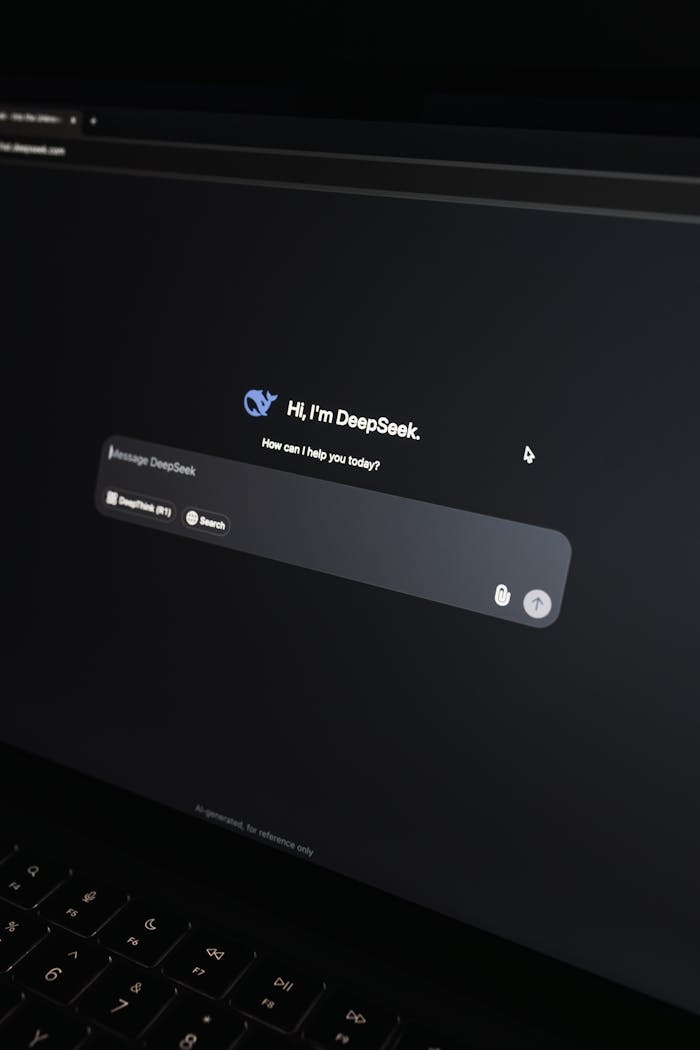
In recent years, the competition among large language models (LLMs) has intensified. Giants like OpenAI, Anthropic, Google, and Meta keep releasing flagship models, while in the Chinese AI landscape, DeepSeek has emerged as a major disruptor.
Touted as “open-source,” “cost-efficient,” and “GPT-4-level,” DeepSeek has drawn massive attention from developers and AI enthusiasts worldwide.
But behind the hype, is it really as powerful as it seems?
This article takes a deep dive into DeepSeek’s advantages and limitations to help you decide whether it’s worth adopting or studying.
1. The Strengths of DeepSeek
1.1 Strong Performance, Near GPT-4 Level
DeepSeek’s natural language understanding and generation capabilities have reportedly reached near-GPT-4 levels in several public benchmarks such as MMLU, HumanEval, and GSM8K—particularly excelling in Chinese tasks.
It performs remarkably well in code generation, long-form summarization, logical reasoning, and mathematical problem-solving.
✅ Real-world tests show that DeepSeek maintains context consistency across complex multi-turn conversations—something rare among open-source models.
1.2 Fully Open-Source and Customizable
Unlike “black-box” models such as GPT-4, DeepSeek’s greatest strength lies in its open-source nature.
Developers can access model weights, fine-tune it for specific tasks, or even distill it into lightweight variants.
For enterprises that require on-premise deployment, privacy control, or compliance, this openness is a major advantage.
💡 In essence, DeepSeek serves as a controllable AI infrastructure, not just an API service you rent.
1.3 Extremely Low Cost and High Efficiency
Another killer feature is its low inference cost.
DeepSeek’s architecture is optimized for efficiency—requiring significantly less memory and compute power than closed-source counterparts with similar performance.
For startups or independent developers, this drastically lowers the entry barrier.
1.4 Superior Chinese Language Capabilities
Unlike English-centric models such as GPT, Claude, or Gemini, DeepSeek is natively strong in Chinese.
It handles classical Chinese, regional dialects, internet slang, and even government-style formal writing with impressive fluency and accuracy.
2. The Weaknesses and Challenges of DeepSeek
2.1 Incomplete Ecosystem and Tooling
Compared to OpenAI’s robust ecosystem (ChatGPT, DALL·E, Whisper, GPTs plugin system), DeepSeek’s supporting tools and APIs remain relatively underdeveloped.
While its open-source nature allows custom integration, the technical barrier for non-developers is still high.
2.2 Outdated Knowledge Base
As an open-source model, DeepSeek’s training data and knowledge base are updated less frequently than closed models.
This can lead to outdated factual knowledge, especially in fast-changing fields like technology or current affairs.
2.3 Stability and Safety Require Improvement
Despite its strength, DeepSeek can still suffer from hallucinations or logical inconsistencies in complex reasoning tasks.
Its alignment and safety mechanisms are also less mature compared to global leaders like OpenAI or Anthropic, so users should carefully validate its outputs in critical applications.
2.4 Limited Multilingual Capability
DeepSeek’s main advantage is in Chinese, but its performance across other languages, especially low-resource ones, still lags behind GPT-4 or Claude 3.
For global or multilingual applications, this could be a limiting factor.
3. Who Should Use DeepSeek?
| User Type | Recommendation | Reason |
|---|---|---|
| Research institutions / universities | ⭐⭐⭐⭐⭐ | Fully reproducible, customizable, great for academic exploration |
| Startups / developers | ⭐⭐⭐⭐ | Low cost, flexible deployment, ideal for local/private setups |
| Enterprises / finance / healthcare | ⭐⭐⭐⭐ | Data control and compliance advantages |
| Content creators / non-technical users | ⭐⭐ | Lacks ecosystem and easy-to-use interfaces |
| International or multilingual teams | ⭐⭐ | Strong in Chinese, weaker in other languages |
4. Future Outlook
The rise of DeepSeek marks a new phase where open-source models are no longer mere followers but credible alternatives to closed systems.
If it continues improving its multimodal abilities, ecosystem integration, and alignment safety, DeepSeek could soon become one of the most influential open-source AI platforms in the world.
However, maintaining technical transparency, community engagement, and consistent updates will be key to its long-term success.
🔹 Final Thoughts
DeepSeek is a breath of fresh air in the open-source AI world — powerful, transparent, and cost-effective, yet not flawless.
If you value control and affordability, it’s worth adopting.
If you prioritize ecosystem richness and seamless user experience, it still has room to grow.